
Start With the Work, Not the Look
On a farm, uniform choices should follow the job first. A tractor operator, packhouse supervisor, field team and delivery driver all need different levels of protection and comfort, even if the garments carry the same logo. If people are bending, loading, climbing, sorting or working in the sun for long hours, the fabric and cut matter more than the style.
For Mbombela and the surrounding Lowveld, heat and dust are part of the day. Light shirts, breathable polos, sturdy trousers and practical outer layers work better than heavy garments that trap heat. Uniforms also need to hold up after repeated washing because farm clothing is usually worn hard and washed often, sometimes after a long day in mud, grass or dust.
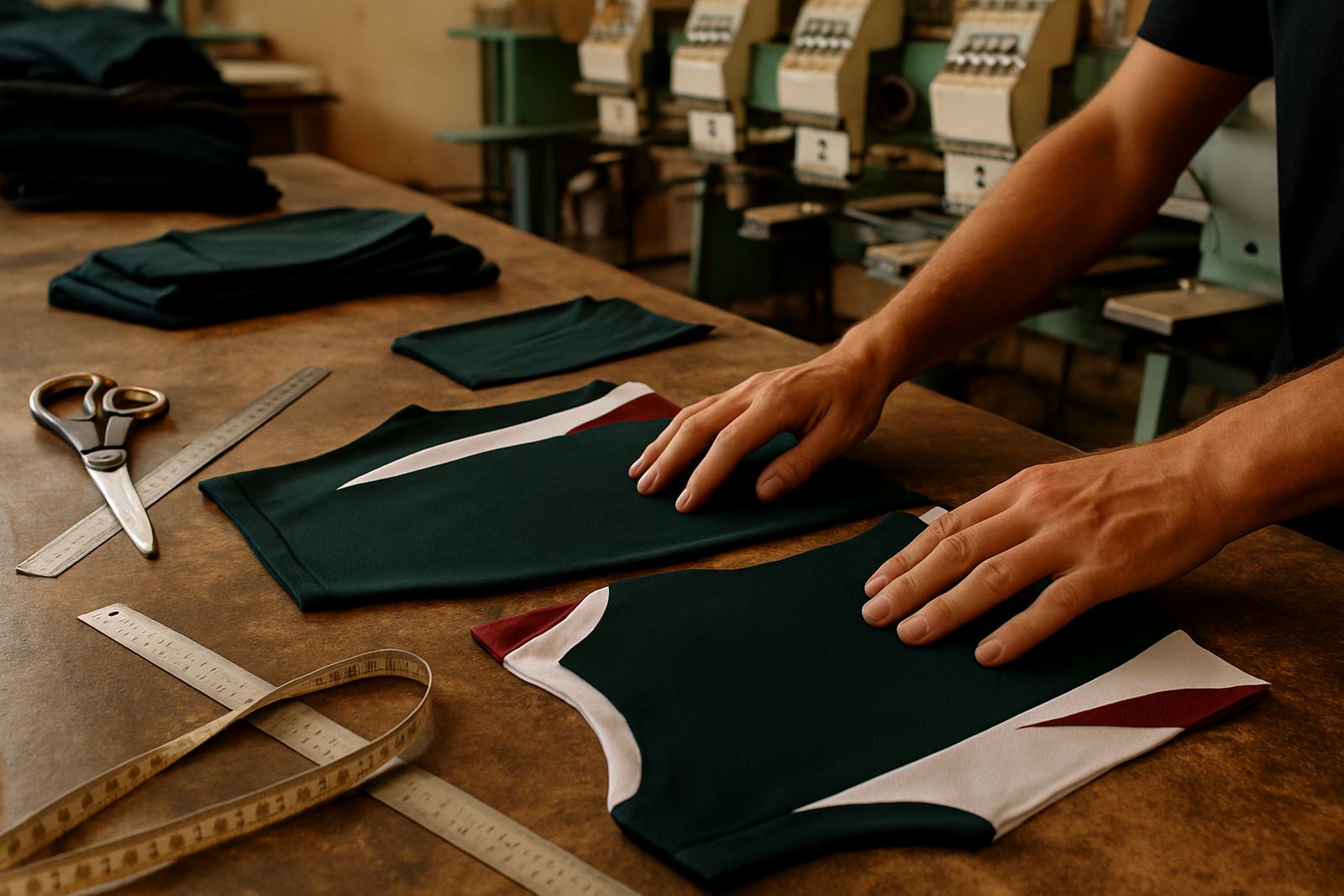
When we advise local businesses, we often start by asking where the garment will be worn, how often it will be washed, and whether staff need visibility on the property. That simple step makes it easier to choose between embroidery, screen printing or sublimation for the final finish.
Choose Fabrics That Handle Heat and Dust
The Lowveld climate can be unforgiving, especially in summer when the sun is strong and humidity rises. Cotton blends, moisture-friendly performance fabric and easy-care materials usually work best for farm uniforms. Pure cotton can feel cooler at first, but it may hold moisture longer and take more time to dry. A good blend often gives a better balance of comfort and wear.
For outdoor teams, it helps to think about three things: breathability, durability and ease of cleaning. Clothing should move with the body, not fight against it, and seams should be strong enough for repetitive work. Dust also gets into every fold and pocket, so simpler designs are often more practical.
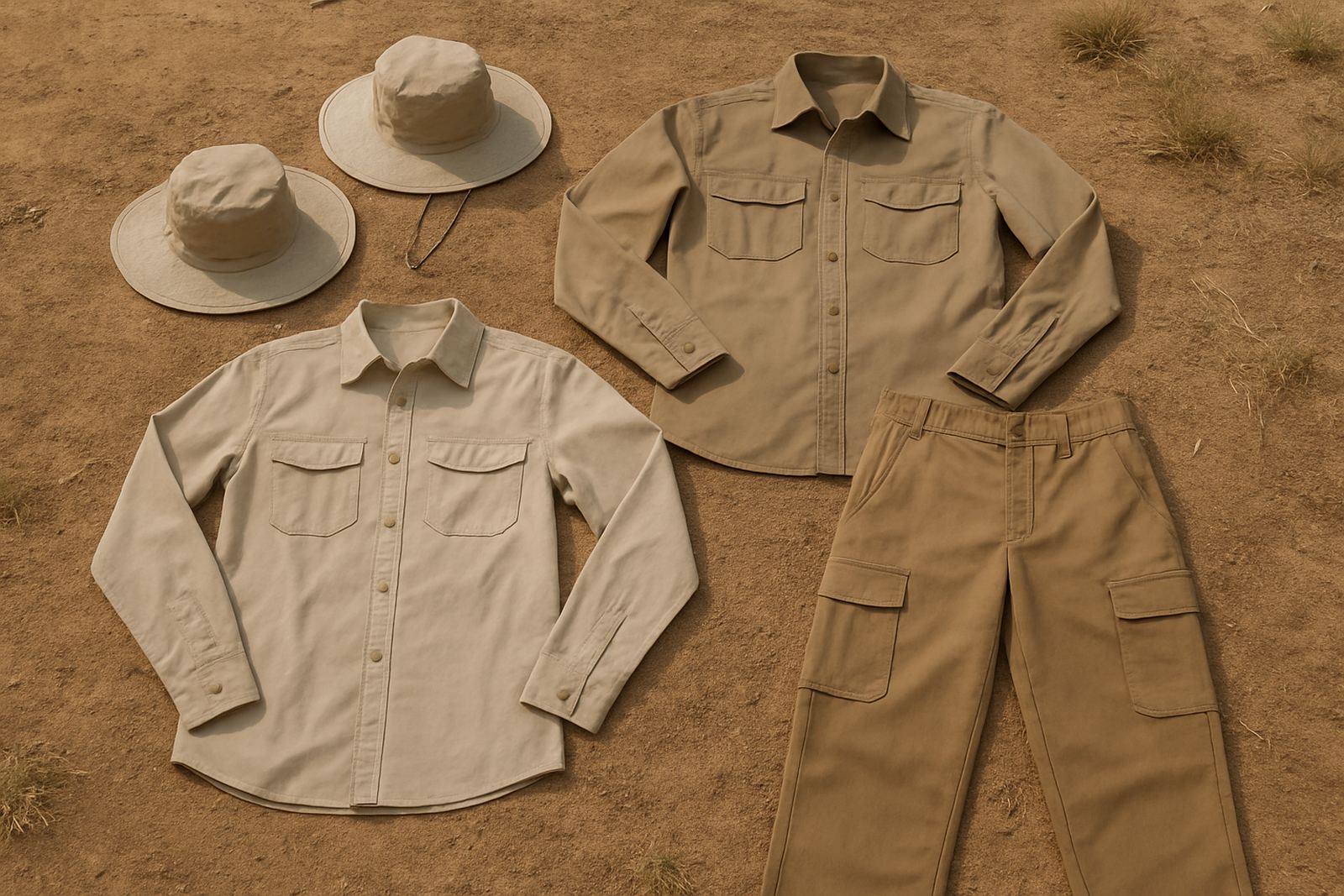
- Lightweight polo shirts for general farm duties and visitor wear
- Long-sleeve shirts for sun protection and dust exposure
- Work trousers or cargo pants with enough give for bending and lifting
- Hi-vis vests or jackets for vehicle areas, loading zones and early morning shifts
- Caps and brimmed hats for extra shade during field work
In coastal-style humidity is not the issue here, but the same principle applies: choose fabric that dries well and keeps staff comfortable through a long shift. A uniform that stays damp too long becomes uncomfortable fast.
Branding That Survives Repeated Washing
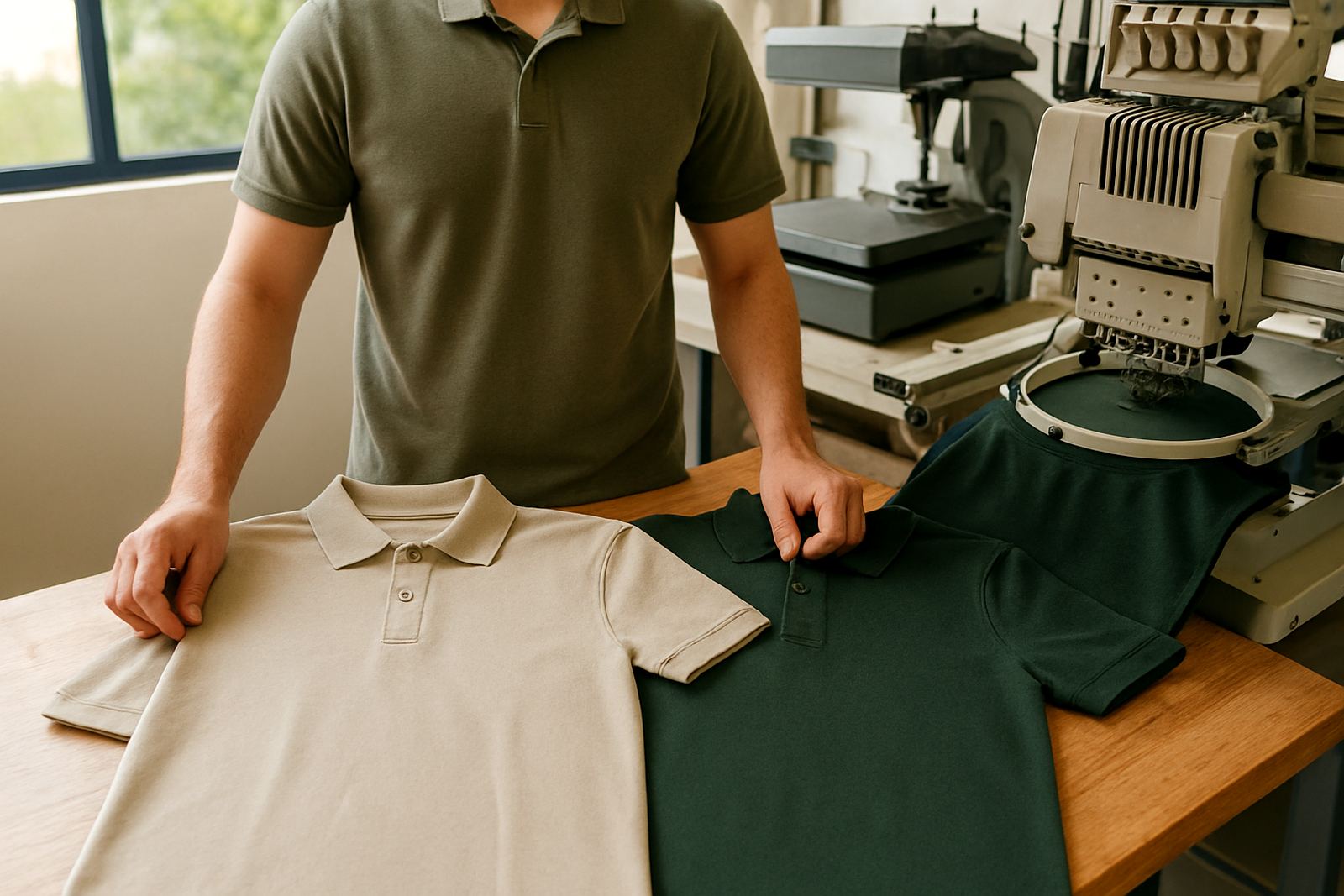
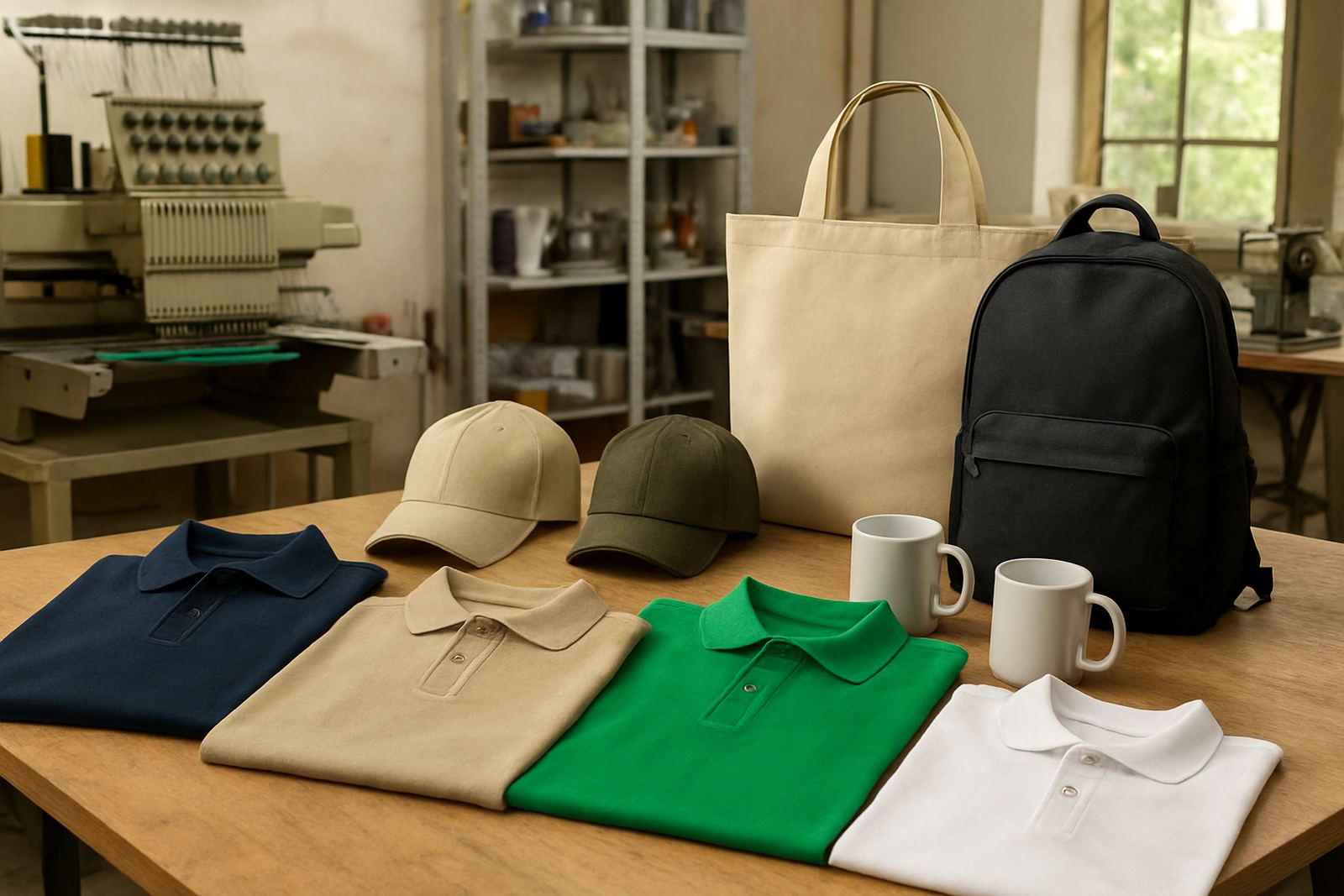
Farm clothing needs branding that stays neat after many wash cycles. Embroidery is often the best option for polos, jackets, coats and caps because it stands up well to hard use. For larger front or back areas, screen printing can be a smart choice when the artwork is simple and the garment fabric is suitable. Sublimation works well for specific clothing types where full-colour graphics or numbering are needed.
The best method depends on the garment, logo detail and use of the item. Fine text can become hard to read if it is too small, so logo digitising matters. A clean digitised file helps the stitch line sit properly and keeps the logo readable on the finished garment. That is especially important for schools, farm managers and admin teams who want a tidy, consistent look across different sizes.
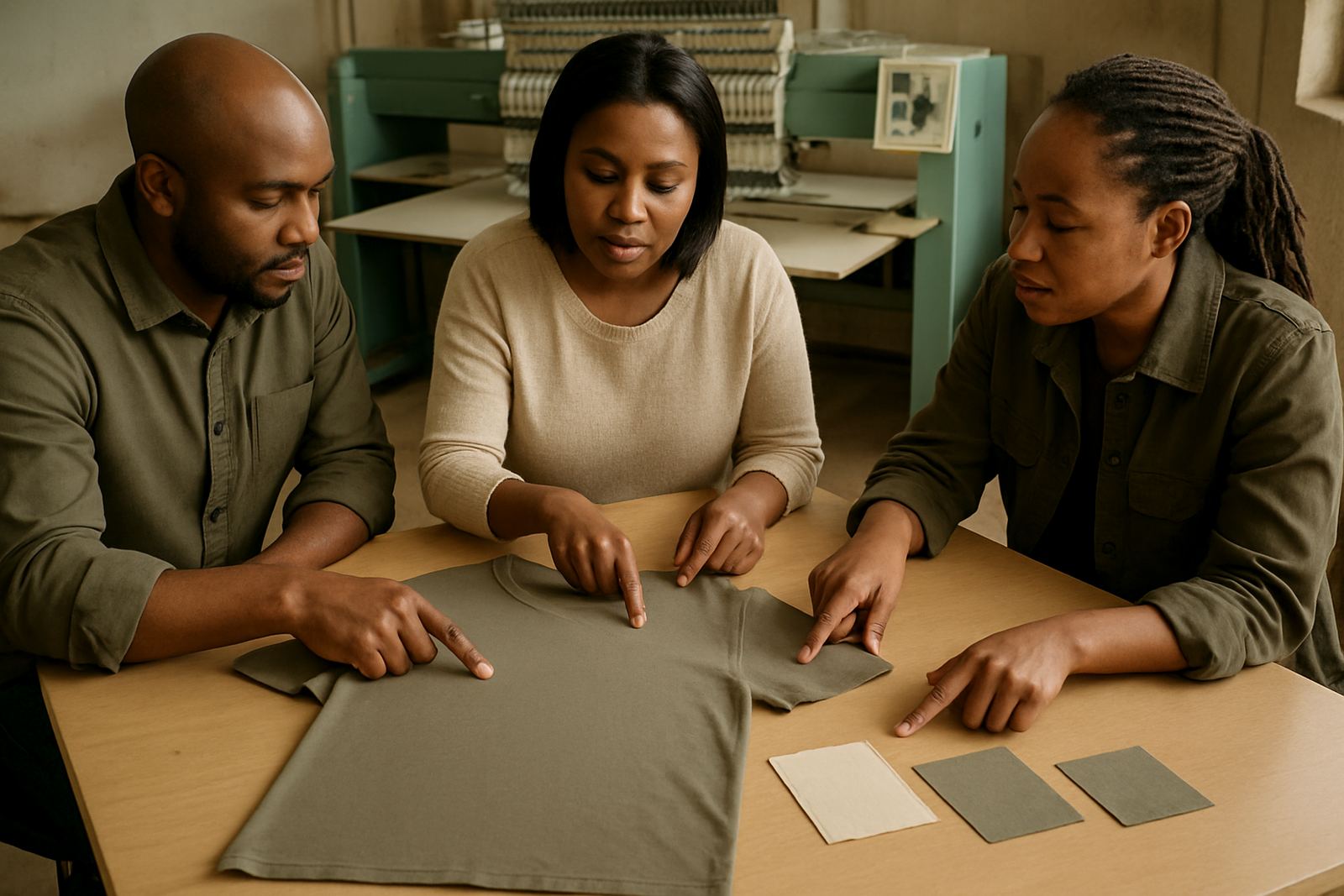
We also recommend mock-ups and approvals before production starts. That gives the client a chance to check size, placement and thread colour before a batch is made. On a busy order, that step can prevent avoidable changes later on.
Build a Uniform Set for Different Farm Roles
Most farms need more than one type of uniform, even if the branding stays the same. A small team on a citrus farm, macadamia farm or mixed agricultural property may need a few basic categories so staff are dressed for their task. It is also easier to manage stock when the wardrobe is planned in sets.
- Field wear for outdoor teams
- Supervisor wear for team leaders and management
- Visitor wear for sales calls, audits and inspections
- Seasonal wear for colder mornings or rainy periods
- Support wear for stores, admin and delivery staff
This approach helps with ordering too. Instead of buying random items through the year, the farm can keep a steady list of approved garments and replenish only what is needed. It saves time and reduces the chance of one team looking different from the next.
At a site near White River, for example, a grower may need lightweight shirts for the picking team, long-sleeve options for orchard work and a more formal branded top for office staff and clients. One uniform plan can cover all three, as long as the garment choices are made carefully.
Practical Details That Make a Big Difference
Small details often decide whether a uniform works well on a farm. Pockets, collar shape, button placement, cuff style and the weight of the fabric all affect comfort in daily use. If staff wear gloves, need to carry tools or handle paperwork, then a shirt with the right pocket placement can be more useful than a more stylish option.
It also helps to think about order volume and packing. Bulk order packing makes distribution easier when a farm has several teams, branches or shifts. Name personalisation can be useful for supervisors, transport staff and visitor-facing roles. For schools linked to farm operations, the same careful approach can be used for sports days, staff wear and fundraising items.
Farm uniforms do not need to be complicated. They need to be practical, presentable and easy to maintain. If the clothing works in the heat, handles dust and still looks in order after a hard week, it is doing its job.
A Lowveld Example That Shows the Difference
A farm outside Malelane might start the week with a gate team, field staff, a packing crew and a driver moving between sites. If all four groups wear the same garment without any planning, some will be too hot, others will lack visibility and a few will wear items that are simply not suited to the task. A better plan would be to use breathable polos for general wear, long-sleeve shirts for sun exposure, a branded cap for each staff member and a hi-vis layer for loading areas.
That same farm could keep the company mark on the chest for daily wear, add a larger back print for vehicle or site visibility and use embroidered caps for supervisors. The result is cleaner, more organised and easier to replace when stock runs low. In a region where dust, heat and early starts are part of ordinary working life, that kind of planning pays off.
CK Embroideries works with farms, schools and businesses across Mbombela, White River, Hazyview, Barberton, Malelane and nearby areas to supply branded garments that suit real work. The aim is simple: clothing that is practical first, then smart, with branding that stays in place.