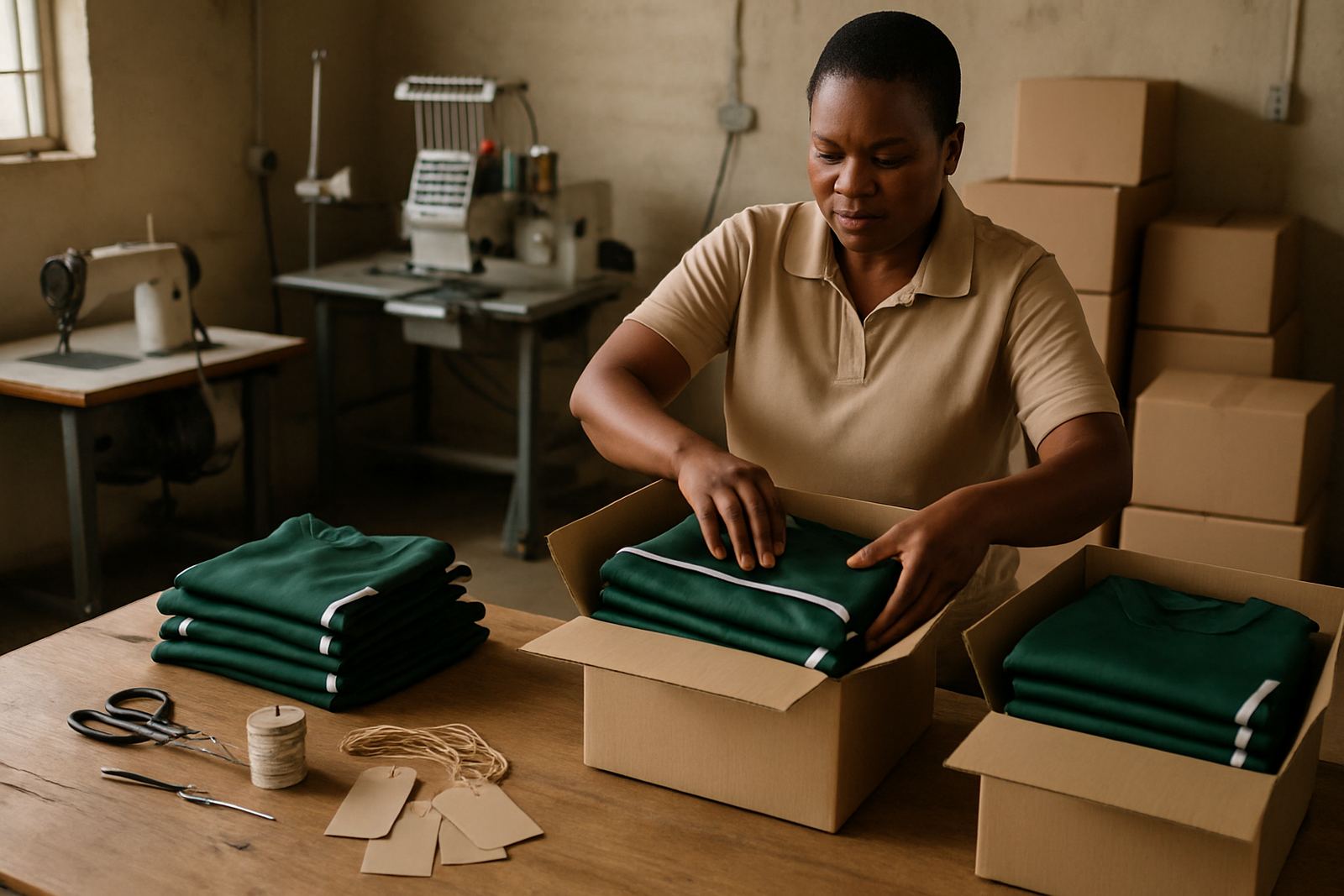
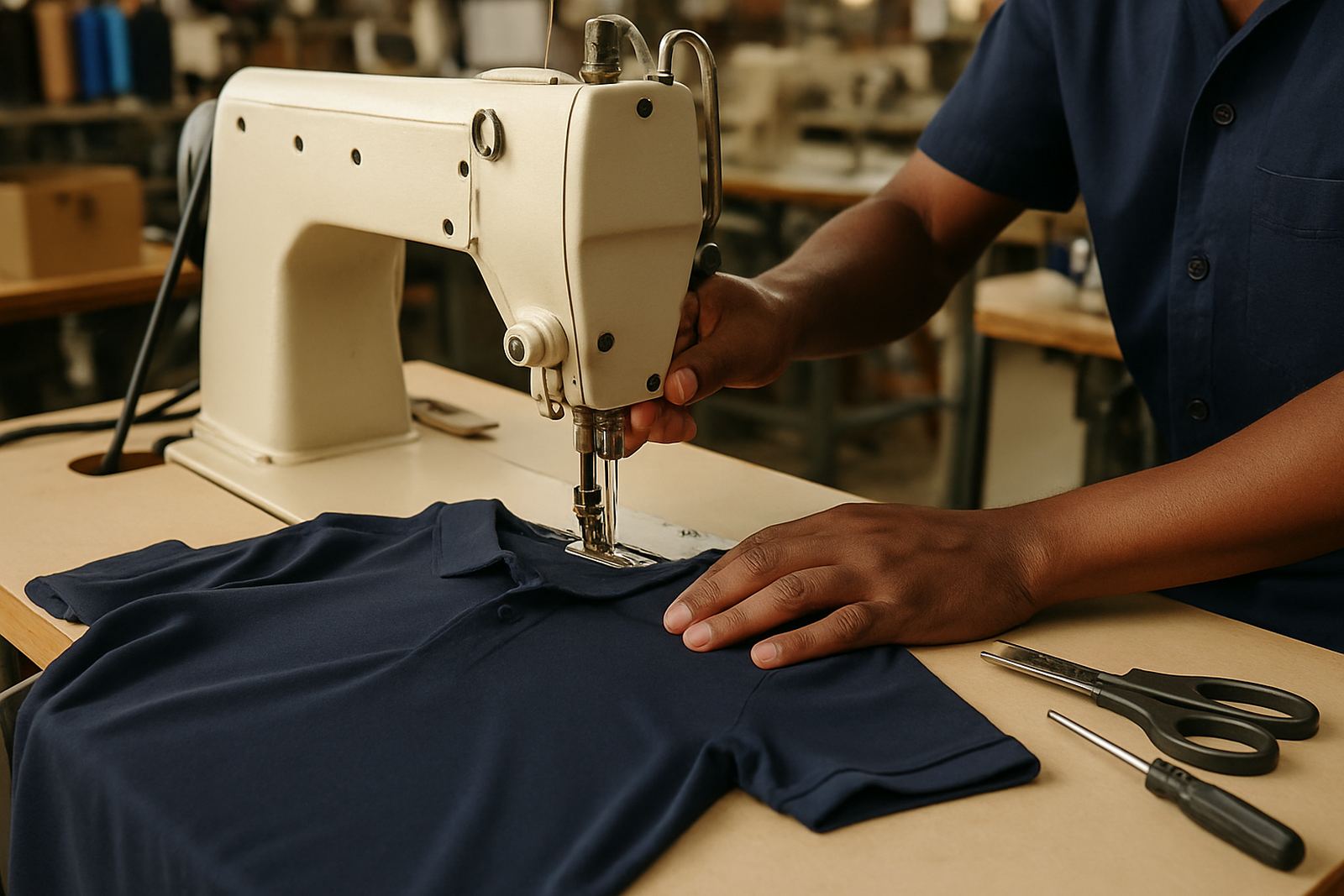
Every year the same crunch comes round. Schools want sports kit numbered before the first fixture, clubs want player names on the back before a tournament, and an event organiser phones on a Tuesday needing a hundred caps with a full-colour logo by Saturday. Embroidery is still the heart of what we do at CK Embroideries, and nothing beats a stitched crest on a school golfer or a fleece. But some jobs just aren't a good fit for thread.
This season we added direct-to-film (DTF) printing to our print room, with the printer, inks and heat presses supplied by AM.CO.ZA. This project note explains why, how the setup works day to day, and what it has changed for the schools, clubs and companies we dress across the Lowveld.
The problem we were solving
Three kinds of jobs kept slowing us down.
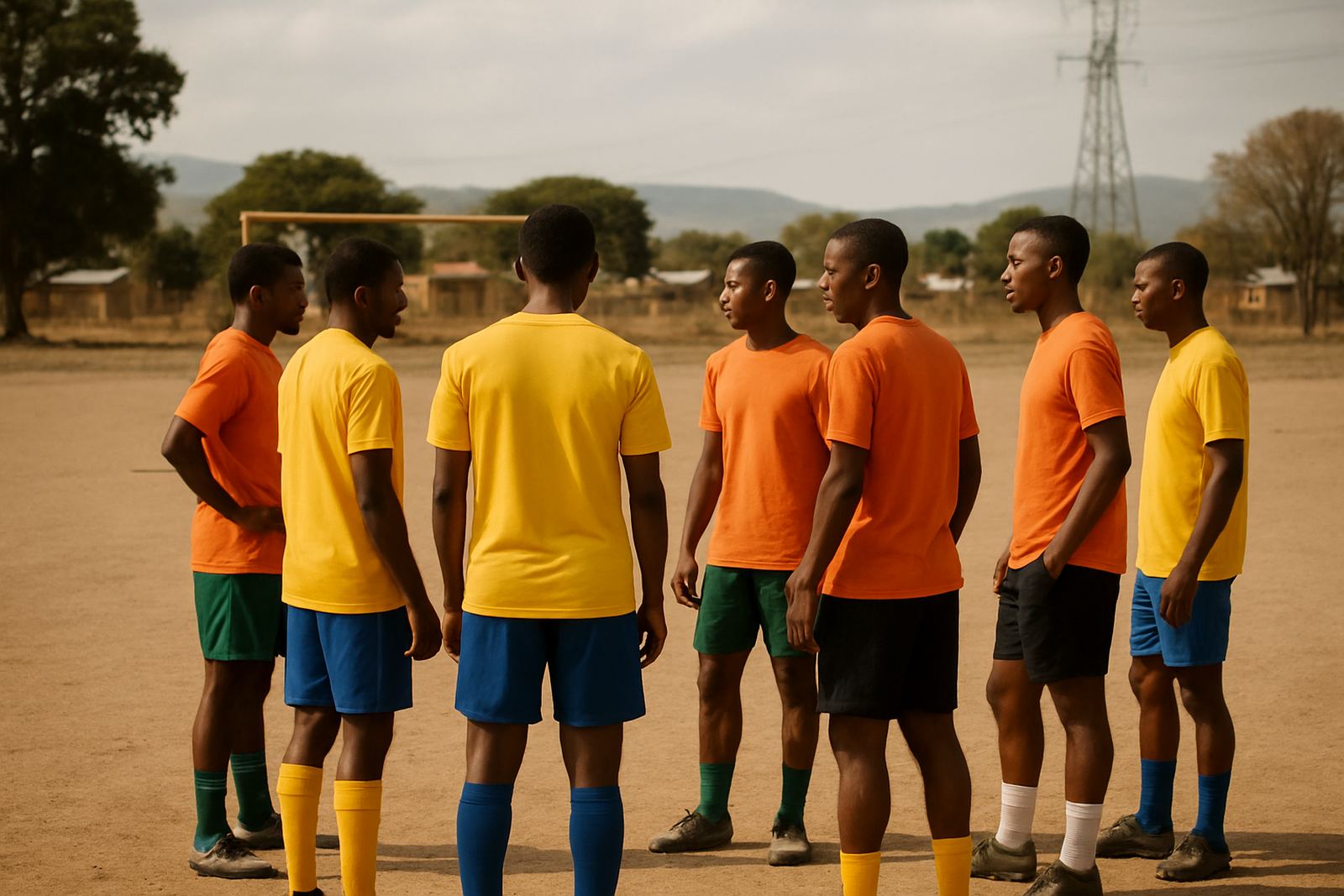
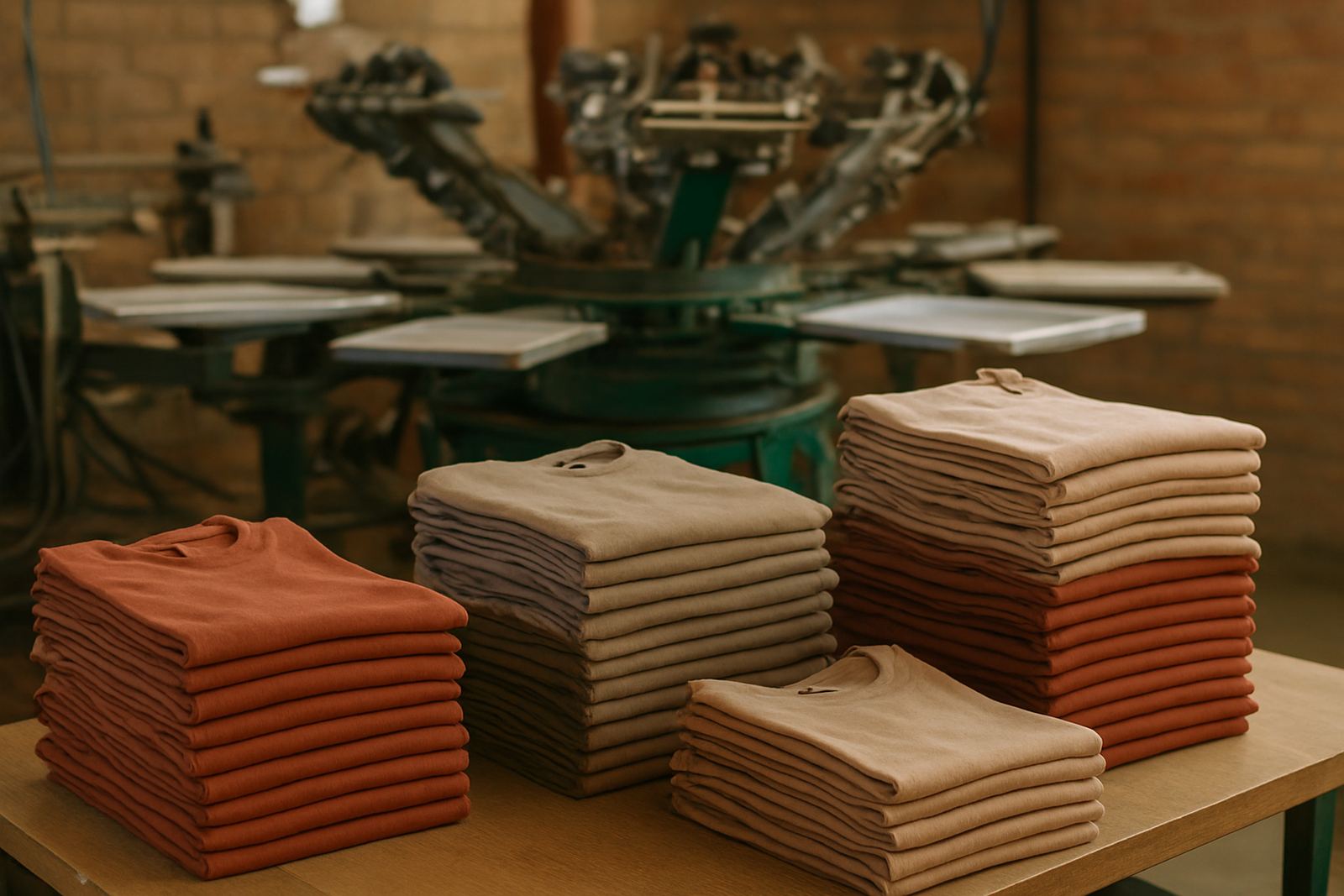
Names and numbers on teamwear. A number on the back of a soccer jersey needs to be big, bold and readable from the stands. Our teamwear numbering guide goes into sizes, but the short version is that a 250mm number in thread is heavy and slow, and on thin training fabric it can pucker. Screen printing works well for runs of the same artwork, but every player's name and number is different, which means a new screen for every variation.
Full-colour logos on dark garments. Many local businesses have logos with gradients, photos or fine detail. On a black or navy shirt, that is hard to reproduce well in thread and costly to screen print in small quantities. We have written about printing on dark shirts before, and it was always a compromise.
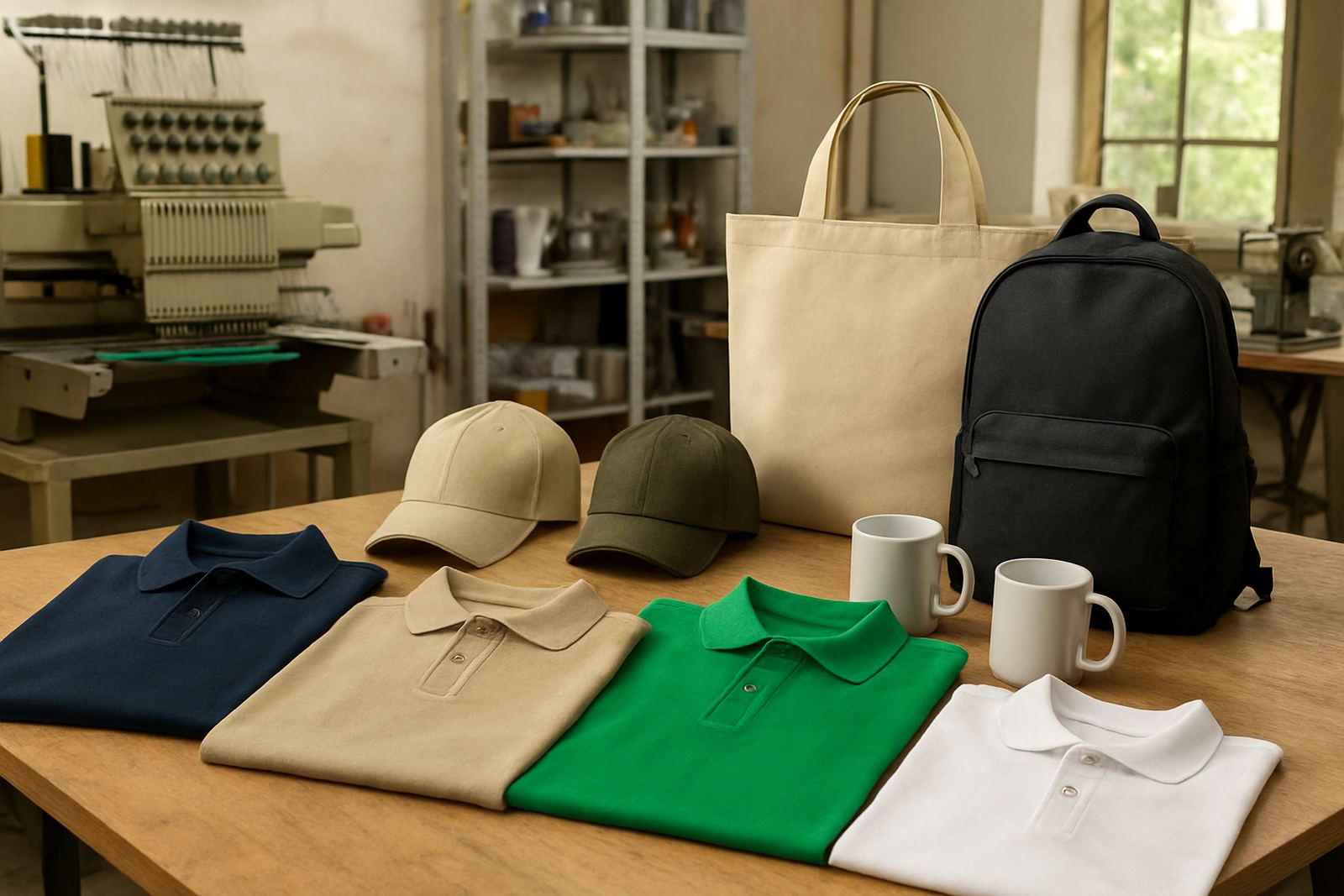
Short-notice caps and bags. Our cap branding is mostly embroidered, and it should be for long-wear corporate caps. But for a one-day event, a client often wants a bright, full-colour mark at a lower cost and a quicker turnaround.
We looked at outsourcing the transfers, but that only moved the waiting to somebody else's queue. If the transfer is stuck in a courier van, the whole order is stuck with it.
Why we went with AM.CO.ZA
We spoke to a few suppliers. AM.CO.ZA came out ahead on what matters most to a workshop like ours: service before we bought, straight advice, and machines that are properly built.
Two of us drove through to AM's Johannesburg branch, where the DTF printers, powder shakers and heat presses were running on the floor. We brought our own artwork: a school crest, a club number set and a client logo with a gradient. We watched it printed, powdered, cured and pressed onto our own shirts, then took the samples home and put them through the wash before deciding. AM also has branches in Cape Town and a newer showroom in Durban, which matters to us because several of our corporate clients have offices on the coast.
What sealed it was the straight talk. We were told plainly which machine size suited our volumes, what consumables we would go through, and what care the white ink needs. No hard sell, just practical advice from people who clearly use these machines themselves.
The setup in our Riverside print room
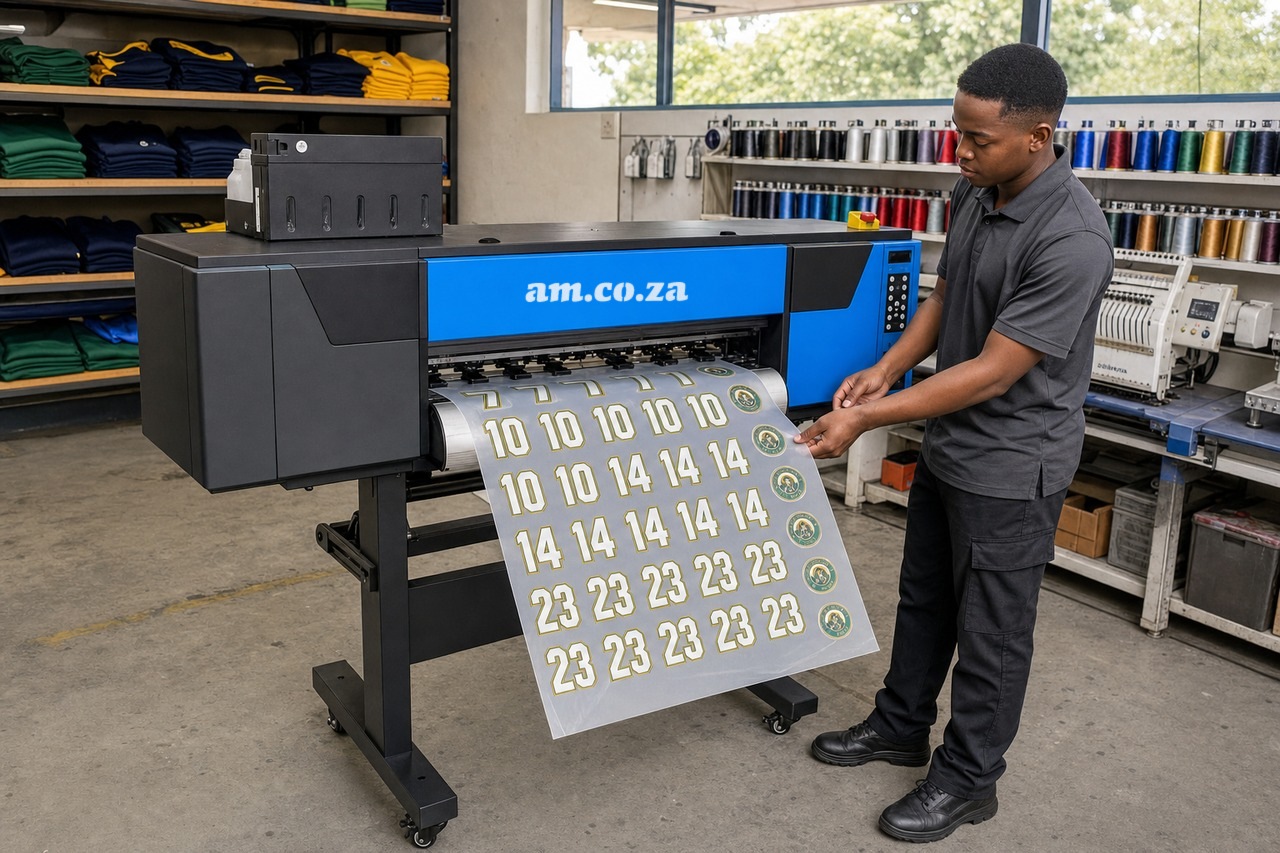
The printer. An AM.CO.ZA 600mm dual-printhead DTF printer with CMYK and white ink tanks and white ink circulation. The circulation matters in the Lowveld: white ink settles if it sits, and a humid summer weekend is the last thing you want clogging a printhead. The printer runs FlowFlex DTF white with cyan, magenta, yellow and black pigment inks, and prints onto 60cm DTF film rolls.
Powdering and curing. The printed film feeds straight into an AM.CO.ZA 600mm powder shaking and baking machine. It applies white DTF hot-melt powder, shakes off the excess, cures the film and rolls it up ready to cut. It has a fume extraction outlet, which we ducted outside so the print room stays comfortable in the summer heat.
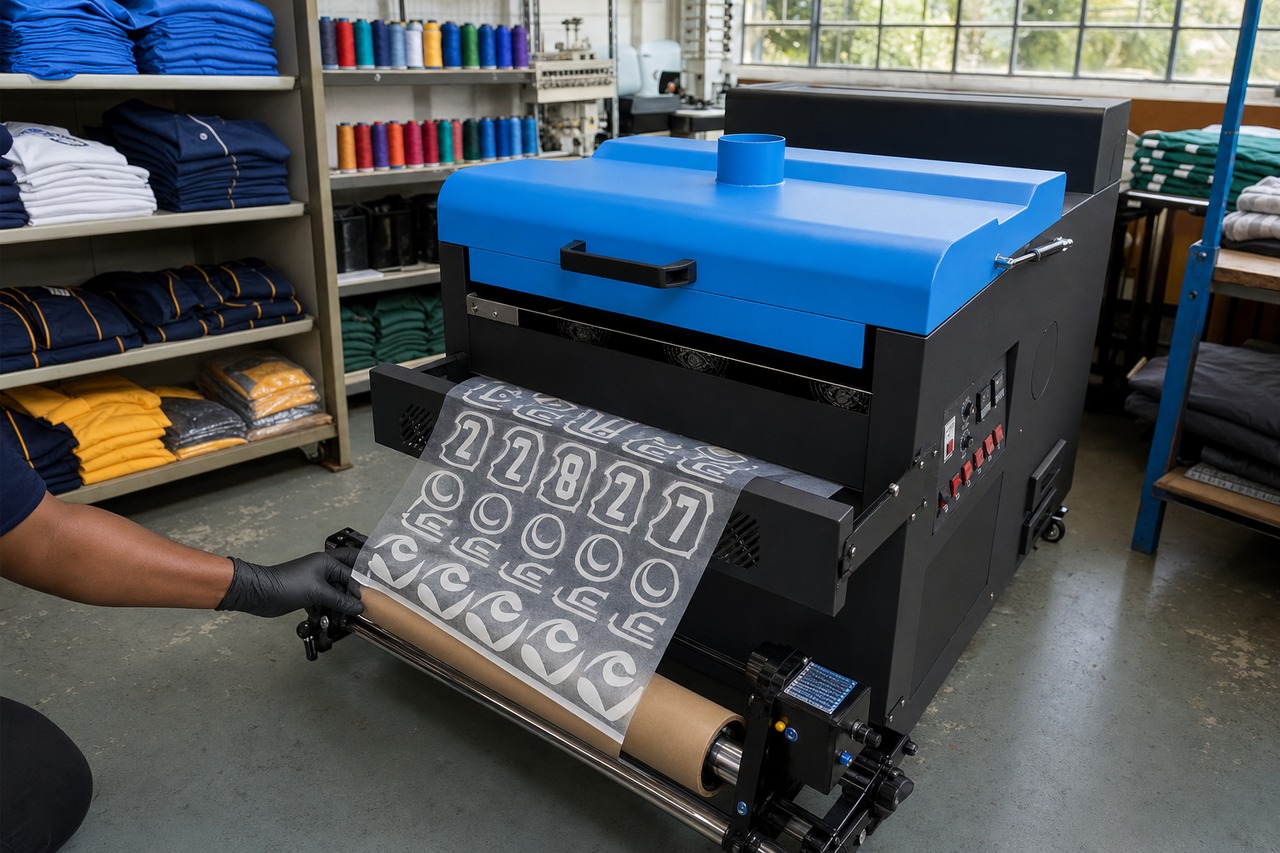
AM's video of the same 600mm powder shaking and baking machine is a good look at how the film path works. For a smaller shop, AM also has a video of a 300mm DTF printing and powdering set running training prints, which shows the same steps on a more compact machine.
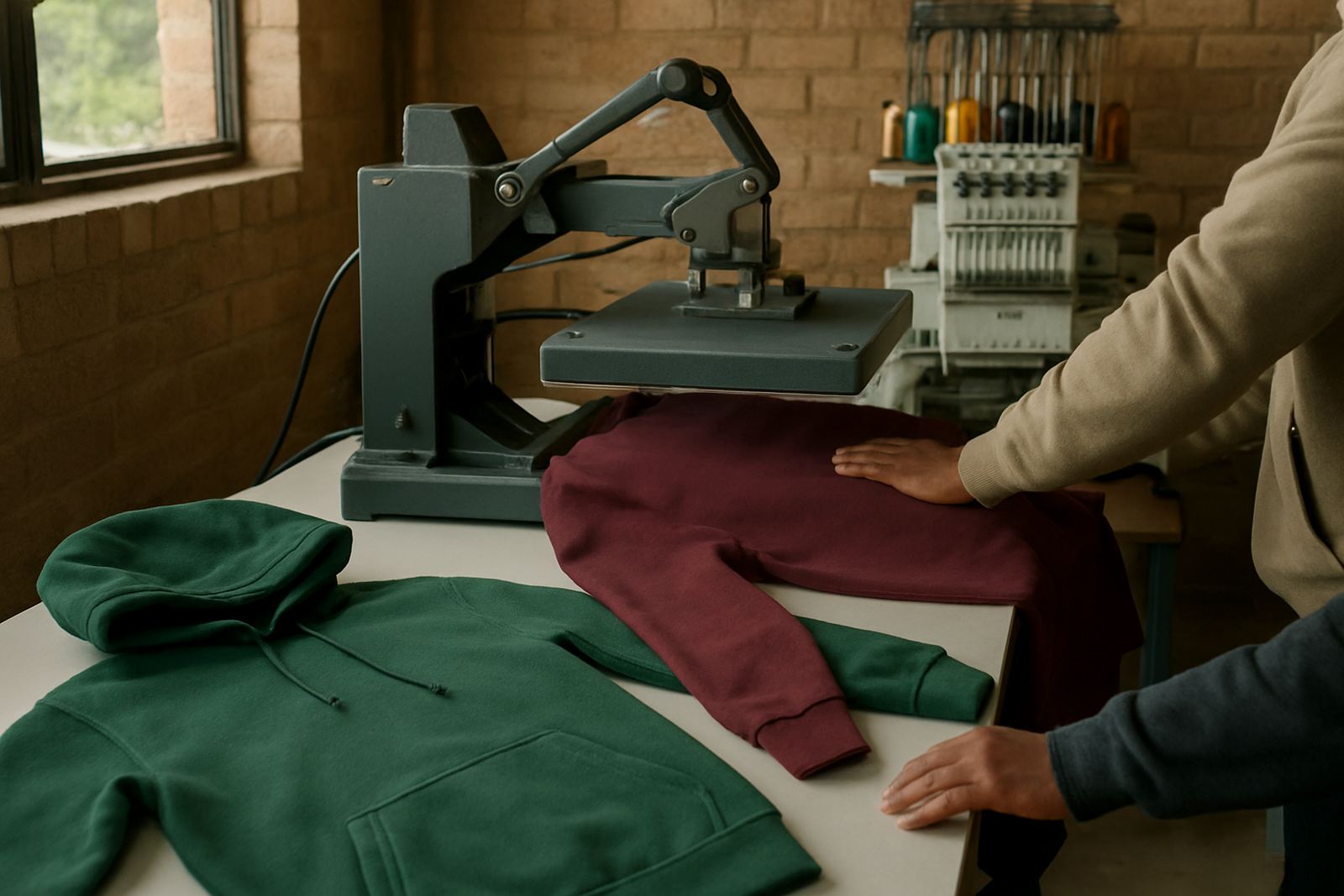
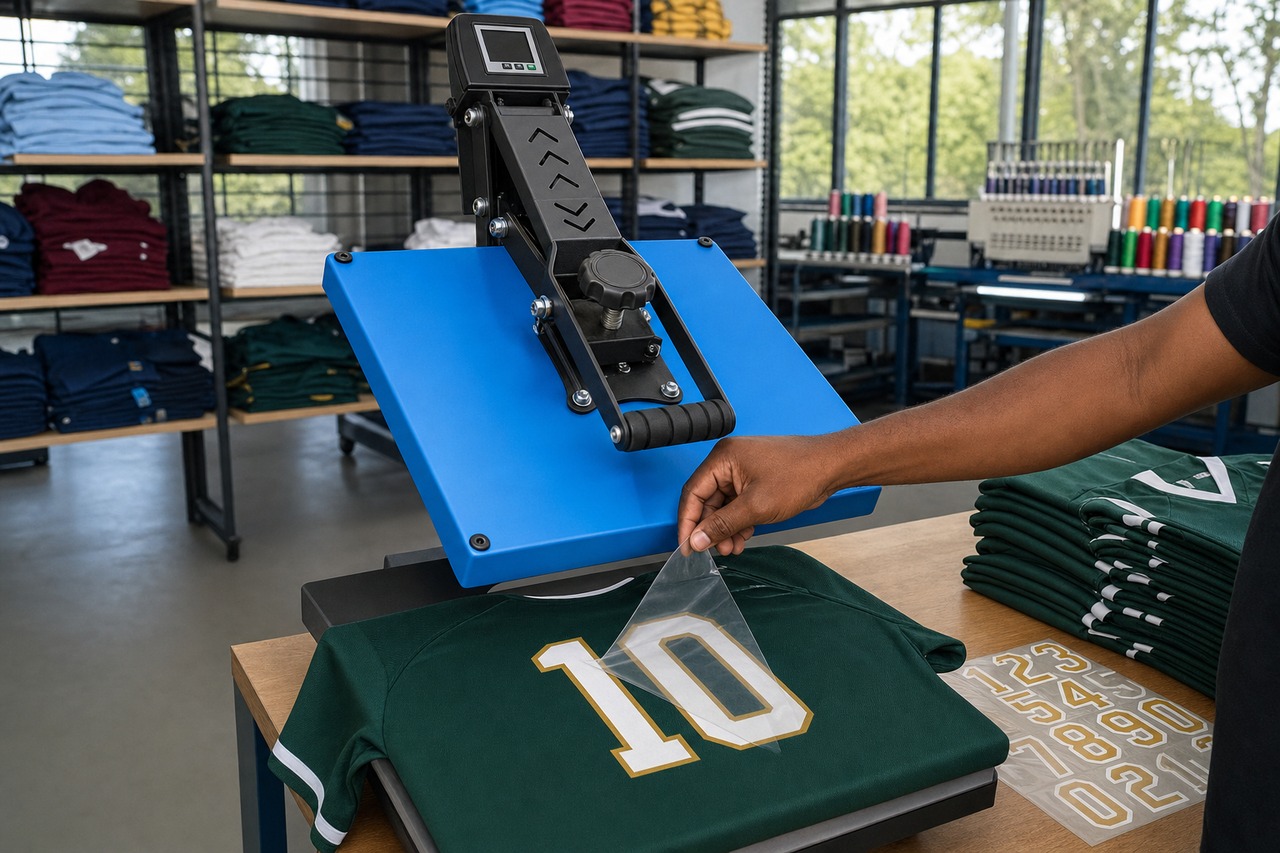
Pressing. Transfers go onto garments with a Heatware 380x380mm clamshell heat press. It is the workhorse of the room: steady temperature, even pressure and a platen big enough for an adult back number. We keep non-stick PTFE sheets on hand to protect garments and the platen, and use heat-resistant tape to hold transfers in place on slippery sports fabric.
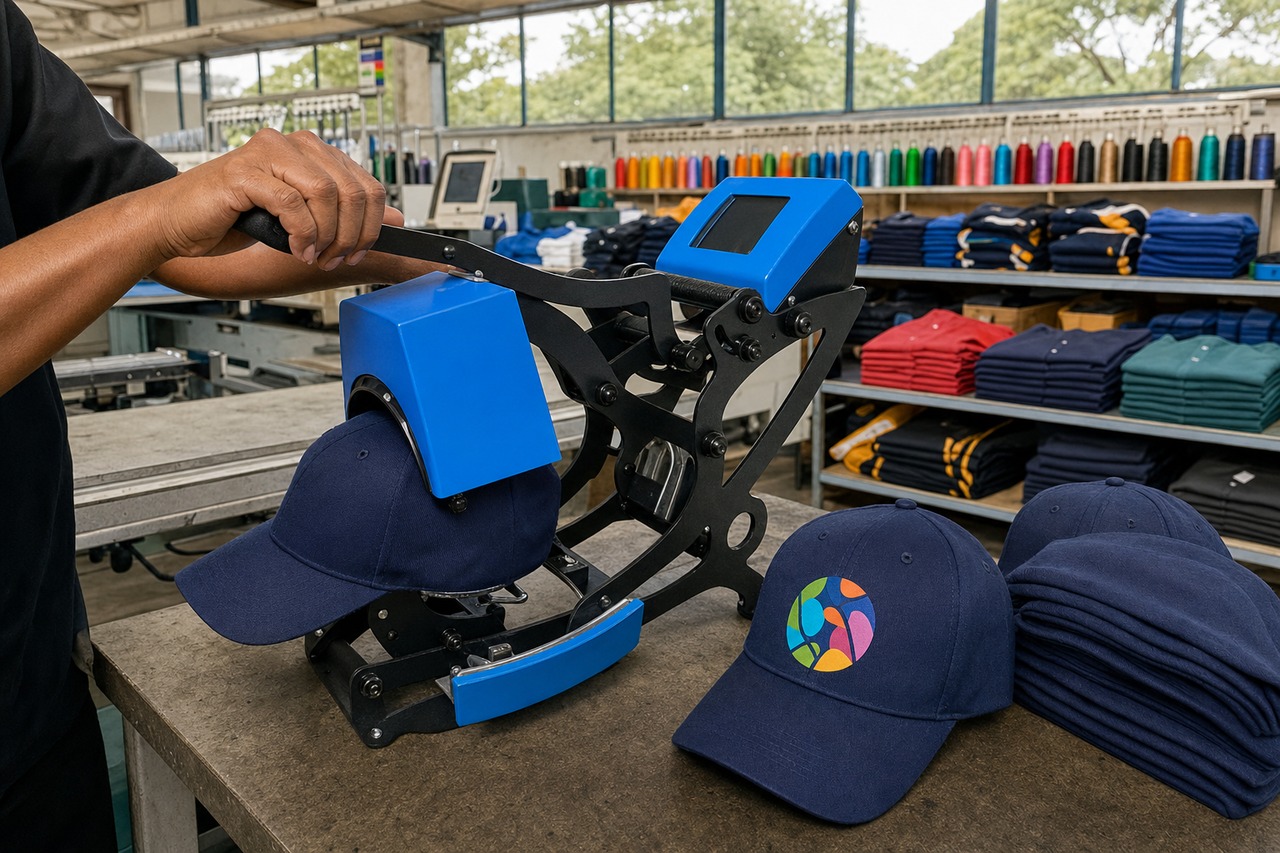
For caps, we added a Heatware advanced cap press with interchangeable pads, so we can press structured caps, bucket hats and beanies without crushing the shape. For the odd mug, plate and cap combination job in our promotional gifts range, AM's Heatware MT5 multi-function press and its automatic tumbler and mug press are next on our list.
How it works on a real order
Our first big DTF job was a school sports order much like our Mbombela school sportswear project: crests embroidered on the chest, as always, with player numbers on the back.
- Artwork and sizing. Our digitiser still prepares the crest stitch file through our logo digitising service. Alongside it, we set up the number sheet at the right size for each age group, following our numbering guide.
- Print and powder. A full squad's numbers print on one stretch of film, then go straight through the powder shaker. One run covers a whole team.
- Cut and sort. We cut the film, sort the transfers by size, and match them to the size run before anything touches a garment.
- Embroider, then press. Crests are stitched first. Numbers are pressed afterwards so the hoop never sits on a fresh transfer.
- Check and pack. Our production team checks every piece against the order list and packs by class or squad, as set out in how we handle orders.
For clubs like the one in our Hazyview soccer club project, sublimation is still our choice for the full-colour shirt body. DTF now handles late additions, such as a new signing's name and number, a replacement shirt or a sponsor mark on a cotton training top. That used to mean reprinting a whole panel.
What changed for our clients
- Names and numbers in-house. Mixed name-and-number sets for schools and sports clubs are now done here, without screens and without waiting on outside transfers.
- Full-colour logos on dark garments. Gradients and fine detail now print cleanly on black and navy shirts, hoodies and bags.
- Event caps on short notice. Events like our Kabokweni youth event can get full-colour caps quickly, while corporate caps stay embroidered.
- The right method for each job. Our embroidery vs print guide now has a third option, and we recommend whichever lasts longest for the way the garment will actually be worn.
Support behind the machines
A machine is only as good as the help behind it. Day to day, AM's support comes through machinery.support, and AM's machine guide helped us with white ink care in the first few weeks. AM's training arm, Ambitious Academy, has online courses that are handy for new staff. If you want to hear from other workshops, AM's reviews page is worth reading.
Whether it's crests stitched, numbers pressed, or both, we are happy to help you choose. See our soccer kits, read about name personalisation, or contact us to meet the team in Riverside, Mbombela.